Summary Of Centrifugal Pump NPSH
1:What is cavitation?
When the local pressure of the liquid in the pump drops to the critical pressure, bubbles will be generated in the liquid. Cavitation is the whole process of bubble gathering, moving, splitting and eliminating. The critical pressure is generally close to the vaporization pressure.
2:What are the hazards of cavitation?
A: Corrosion of DEPUMP Centrifugal Pump Wet parts
(1) The metal surface is mechanically denuded due to the high frequency (600-25,000 HZ) impact when the bubbles burst and the pressure is up to 49 Mpa.
(2):Because of the heat released during vaporization and the hydrolysis produced by the temperature difference battery. The oxygen generated oxidizes the metal and causes chemical corrosion.
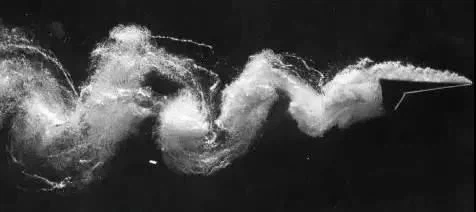
B: Decreased pump performance
(1) :The energy exchange in the impeller is disturbed and destroyed when the pump cavitates. The performance on the external characteristics is Q-H curve, Q-P, Q-_curve drops, and in severe cases, the liquid flow in the pump will be interrupted and cannot work.
(2): For low specific speed, the performance curve will drop sharply once cavitation occurs and bubbles fill the whole flow channel due to the narrow and long inter-blade flow channel.
(3): For medium and high specific speed, the flow channel is short and wide, so the development of bubbles from occurrence to filling the whole flow channel requires a transitional process, the corresponding performance curve begins with a slow decline, and then increases to a certain flow rate before a sharp decline.

3: Centrifugal pump most prone to cavitation
A:The front cover with the largest curvature of the impeller is near the low-pressure side of the blade inlet edge.
B: The low-pressure side near the inlet edge of the volute septum and guide vane in the extrusion chamber.
C: The sealing gap between the outer circle of the blade tip and the shell and the low-pressure side of the blade tip of the high specific rotation impeller without the front cover plate.
D: The first stage impeller in a multistage pump.

4: Improvement of anti-cavitation measures
A: Measures to improve the anti-cavitation performance of centrifugal pump itself
(1): Improve the structural design of the suction port of the pump to the impeller.Increase the overflow area; increase the curvature radius of the inlet section of the impeller cover plate to reduce the drastic acceleration and pressure drop of the fluid flow; appropriately reduce the thickness of the blade inlet, and round the blade inlet to make it close to the streamline shape, which can also reduce the acceleration and pressure drop of the head of the winding blade; improve the surface finish of the impeller and the blade inlet part to reduce the drag loss; and import the blade side to the impeller. Extension, so that the liquid flow accepts work in advance, improve pressure
(2):The pre-induction wheel is used to make the liquid flow work in advance in the pre-induction wheel to improve the liquid flow pressure.
(3): When double suction impeller is used to let the liquid flow enter the impeller from both sides of the impeller at the same time, the inlet section will be doubled and the inlet velocity can be reduced by twice.
(4): A slightly larger positive impact angle is used in the design condition to increase the blade inlet angle, reduce the bending at the blade inlet, reduce the blade obstruction, so as to increase the inlet area, and improve the working conditions under large flow rate to reduce the flow loss. However, the positive angle of attack should not be too large, otherwise the efficiency will be affected.
(5): Use anti-cavitation materials. Practice shows that the higher the strength, hardness and toughness of the material, the better the chemical stability and the stronger the cavitation resistance.
5: Measures to Improve Effective Cavitation Residual of Liquid Intake Device
A: Increase the pressure of the liquid level in the tank before the pump to improve the effective cavitation margin.
B: Reduce the mounting height of the suction pump.
C: Change upper suction device to reverse irrigation device.
D: Reduce the flow loss in the piping before the pump. For example, in the required range, shorten the pipeline as far as possible, reduce the flow rate in the pipeline, reduce bends and valves, and maximize valve opening, etc.
E: Reduce the working medium temperature at the pump inlet (when the working medium is near saturation temperature).
The above measures can be comprehensively analyzed and applied appropriately according to the conditions of pump type selection, material selection and the use site of the pump.
6: Units of measurement and letters
Cavitation margin refers to the difference between the total head of the liquid at the pump inlet and the pressure head when the liquid vaporizes. Units are marked in meters (water column) and expressed in terms of NPSH, which are specifically divided into the following categories:
A: NPSHa - device cavitation margin is also called effective cavitation margin, the larger the more difficult to cavitate;
B: NPSHr - pump cavitation margin, also known as necessary cavitation margin or dynamic pressure drop at pump inlet, the smaller the anti-cavitation performance is, the better;
C: NPSHr - pump cavitation margin, also known as necessary cavitation margin or dynamic pressure drop at pump inlet, the smaller the anti-cavitation performance is, the better;
D: [NPSH] - Permissible Cavitation Allowance is the Cavitation Allowance used to determine the conditions of use of the pump, usually taking [NPSH] = (1.1-1.5) NPSHc.


